Hagia Irene (Topkapi Palace), Istanbul, Turkey
Exhibition with Ergin Inan
From September 6th to September 12th 2010
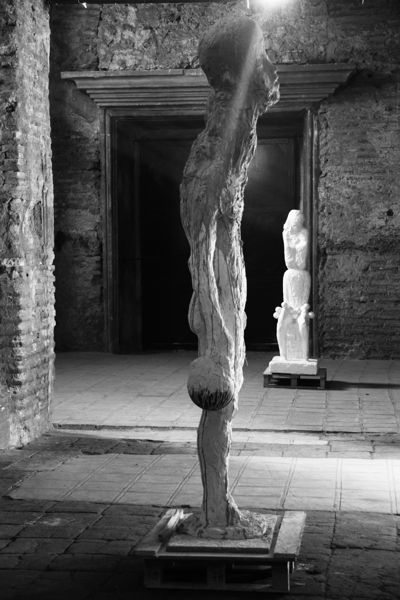
Hemisphere | Ergin Inan and Johan Tahon
The highlight of the various events at the Hagia Irene will be two solo presentations
by Ergin Inan and Johan Tahon. Ergin Inan has worked on ‘the corners’ in the interior of this early Christian church with icons (letters with insects, animals, etc..).
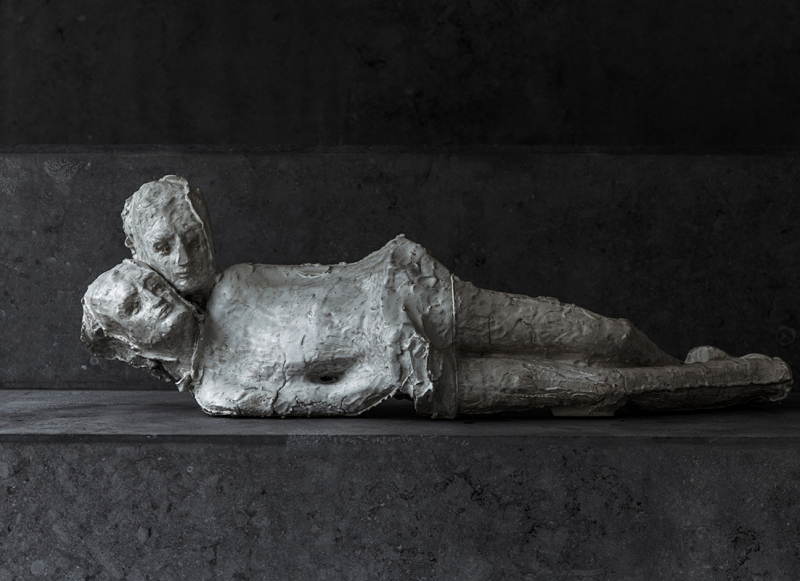
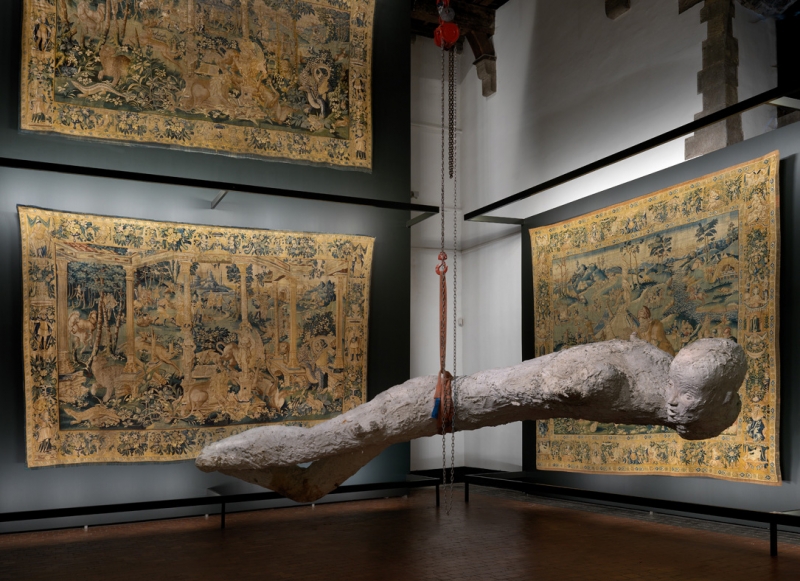
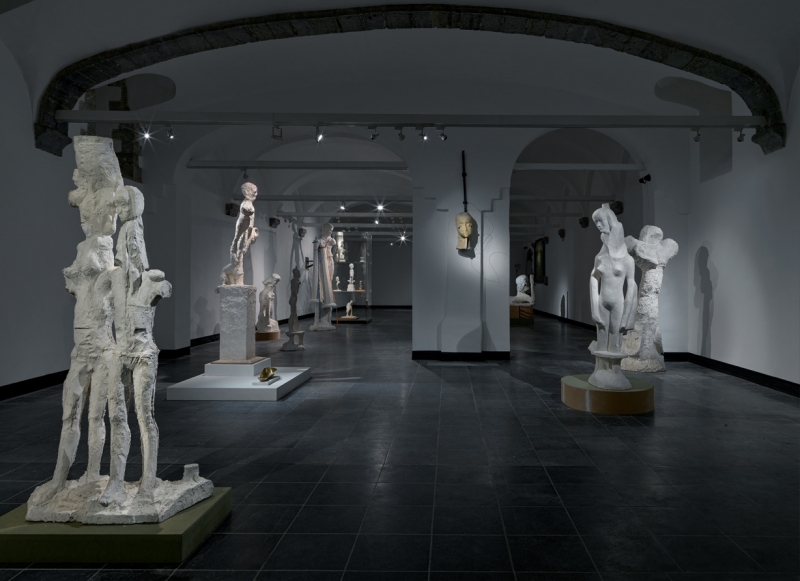
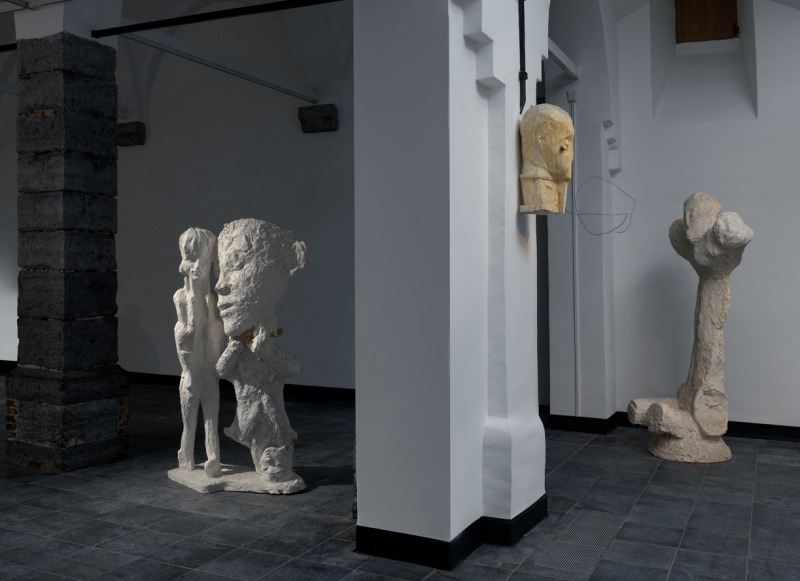
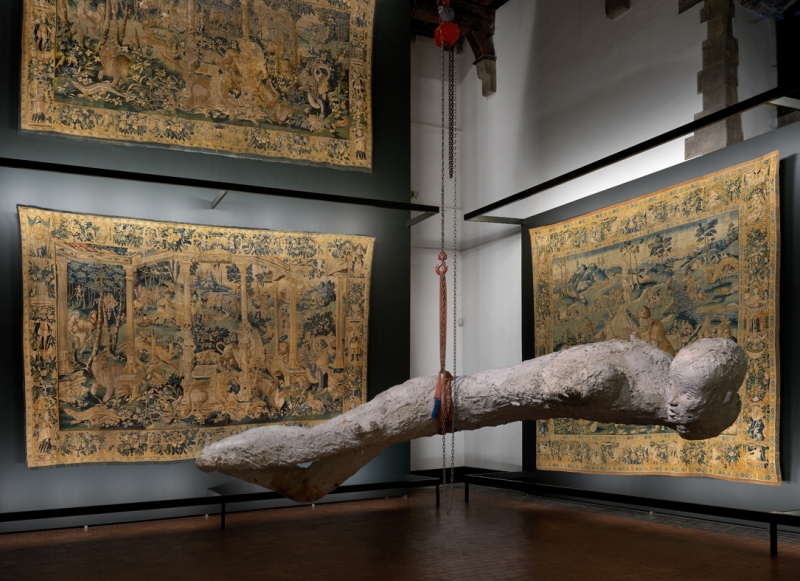
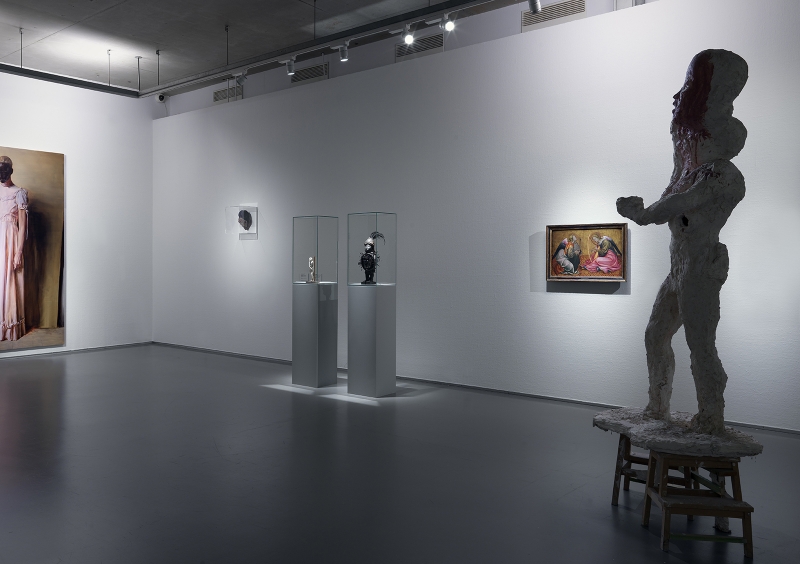
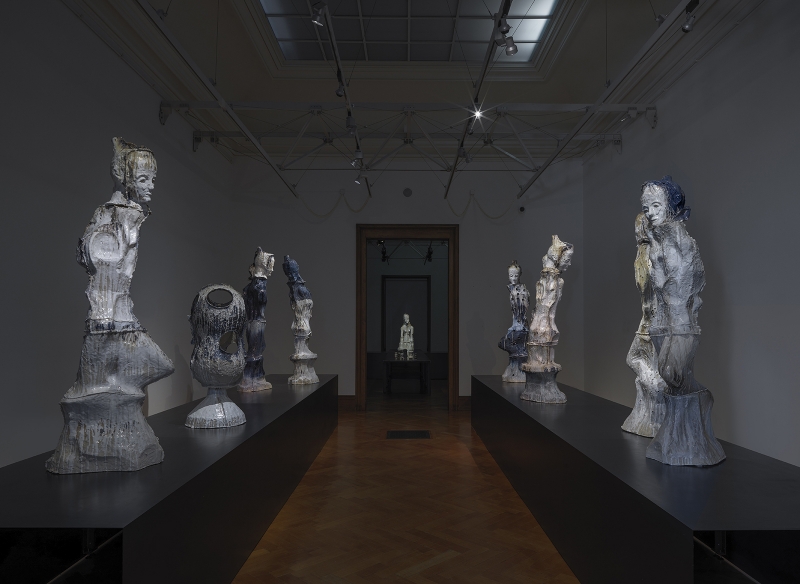
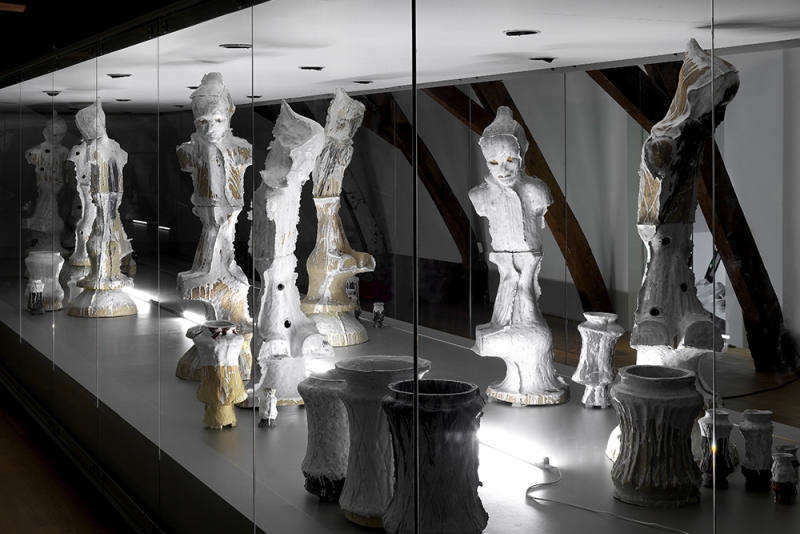
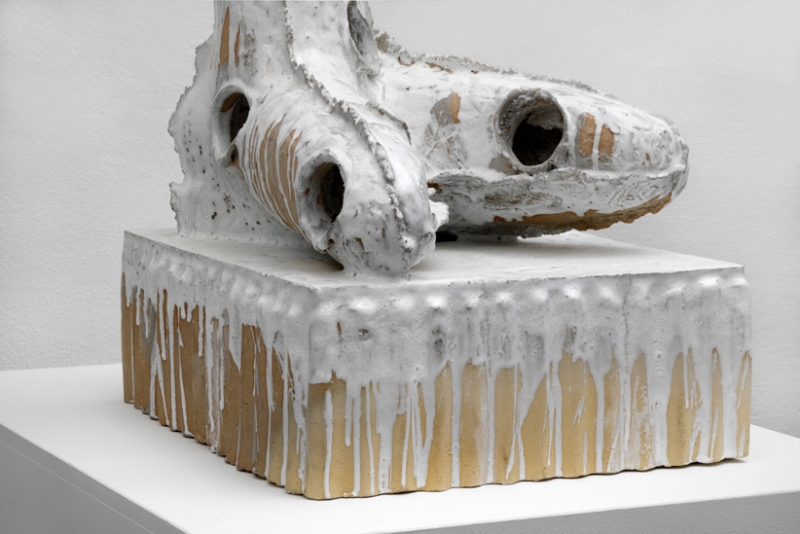
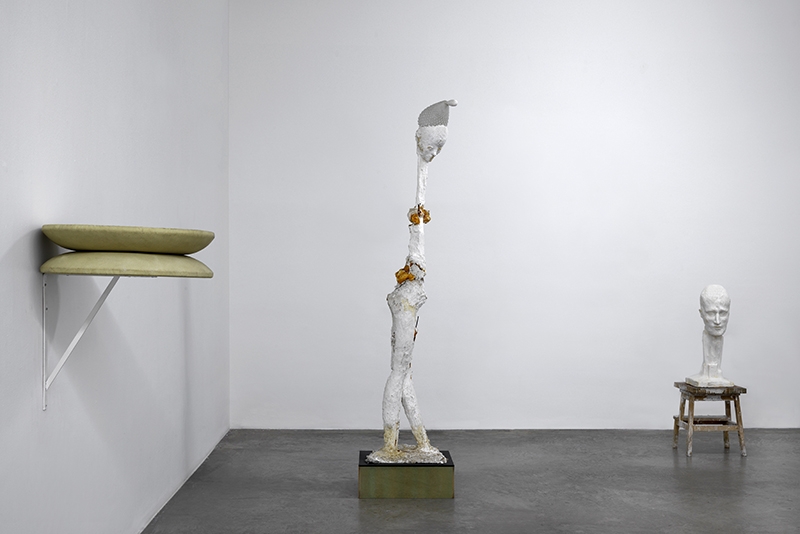
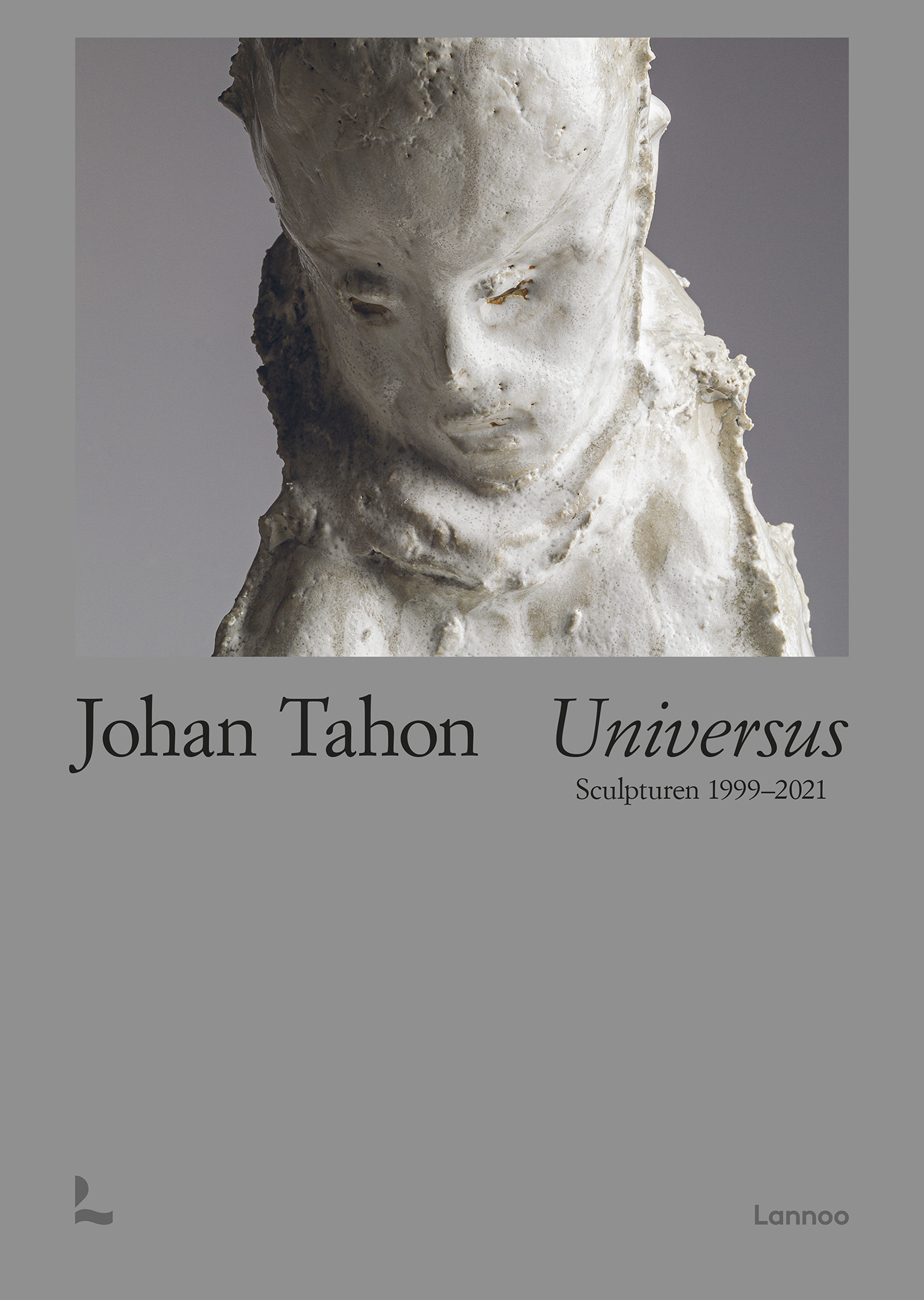
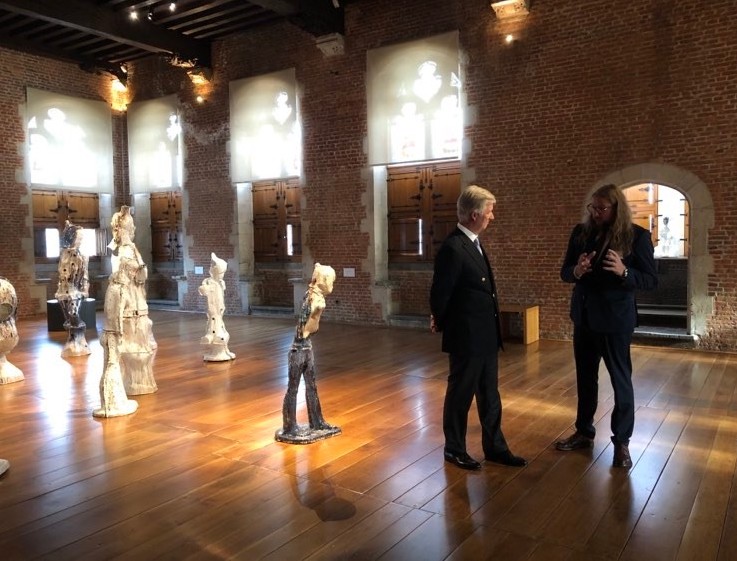
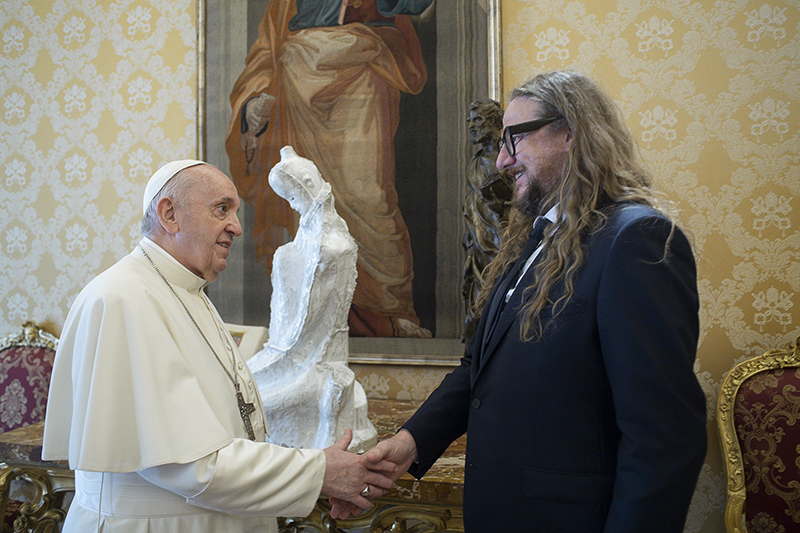
Johan Tahon has made a monumental work in plaster and ceramic, including a large
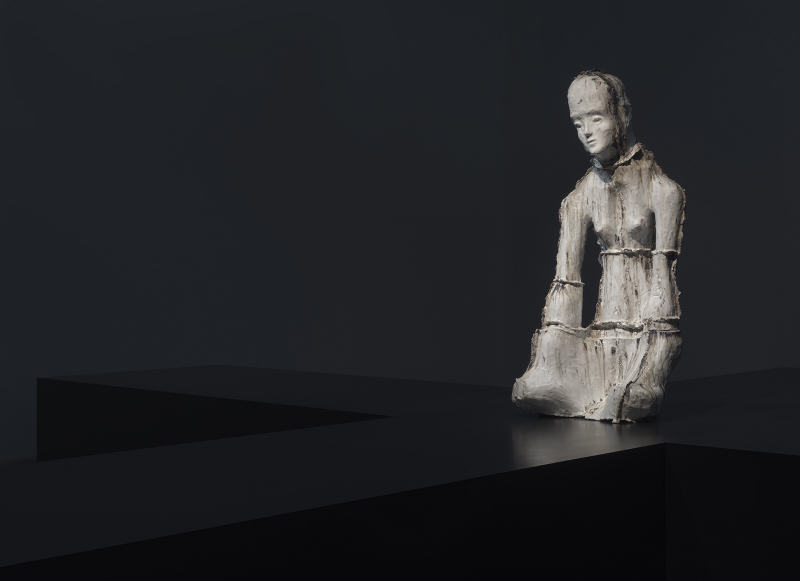
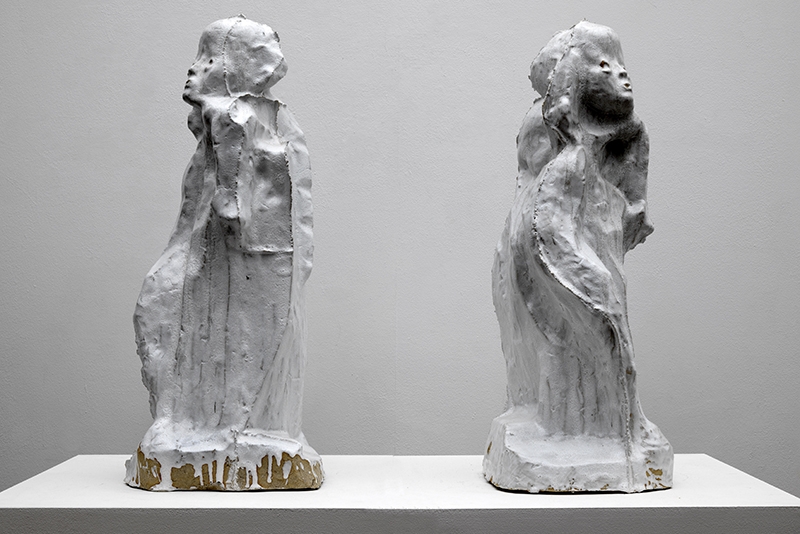
white figure in his own, typical Tahon-style, as well as a series of sculptures inspired by mystical texts from the Arabian mystic and philosopher, Ibn Arabi (13th century),
The main theme of which is the ‘Transfiguration and light’.
The opening takes place on Monday 6 September at 7:00PM with an introduction by Willy Van den Bussche, Honorary Chief Curator Museum of Modern Art |PMMK| Ostend, at the Hagia Irene |First Courtyard Topkapi Palace| Sultanahmet.
Open 1:00PM – 7:00PM Wednesday – Thursday, 9:00AM – 7:00PM, Friday – Sunday, closed on Tuesday. Exhibition 8 –12 September 2010.
A Silencing soul
In between solace and the inconsolable
by Jenke Van den Akkerveken
All things Are too smallTo hold me,I am so vastIn the InfiniteI reachFor the UncreatedI have touched itIt undoes meWider than wideEverything elseIs too narrowYou know this wellYou who are also there – Hadewijch, 13th century–
Johan Tahon:
“Have I ever told you about the dream image I had when I was fourteen years old? A giant, soft humming fireball that suddenly, out of the blue, appeared in the sky, spreading a bright white light. A few seconds, maybe minutes… hard to tell. I was stunned. There was no fear, on the contrary. I was overwhelmed by a warm feeling of recognition and ease. I wished I could stay forever in that moment, in that all-embracing place. When the experience was over, I immedeately was cast back in a lonely void and I felt a deep pain that hasn’t left me ever since. What happened? I couldn’t tell. Probably there’s a perfect scientific explanation for the experience but to me that wouldn’t make any difference. For a long time I never spoke to anybody about it, but in my art I’ve always continued searching for that particular moment. I want to tell my story through my sculptures.”
Where would the story of Tahon belong better than in the Hagia Irene, a magical church that still, 1800 years after its foundation, emanates the rich spiritual atmosphere of the early Byzantine empire. Although the building didn’t escape the violence of the iconoclastic riots and is almost completely stripped of the once impressive golden tesserae mosaics, the Hagia Irene still feels like a natural sanctuary for sculptures and their spectators.
You don’t just walk into a studio of Johan Tahon. You enter it like a holy place, a sanctum of silence. Humble, whispering, in awe of these white specters with their scabbed surfaces under which an entire world is hidden. Each sculpture wants to tell you its own story, wants to take you away to its place of origin, its birthplace.
Tahon describes this initial place as an unceasing, vibrating, ever expanding and shrinking dimension that creeps under his skin. In this zone he can create without words. It is both a cerebral and an emotional space in which there is a constant interaction between inspiration, the self and the unknown. The sculptures of Tahon are the result of this interchange. They are the incarnation of an emotional connection with everything that surpasses literal meaning.
The sculptures of Tahon are vulnerable. They are wounds. Bodies turned inside out. To Tahon every plastic action is the exteriorization of a painfully healing flash, of a paradox between touching and releasing. His sculptures are premature condensations of the unmarked, the volatile unknown.
When you ask him about the genesis of his sculptures, Tahon speaks at the same time about a flashing touch that closely resembles absolute love and the inevitable rejection that follows. At the foundation of his sculptures lies a painful but undying desire. His work originates from an existential experience of pain, of sudden solitude, an unceasing feeling of want, an eternal void that can never be completely filled. By this experience Tahon touches base with the universal feeling of abyss from which all meaning is derived.
During the creation, the act of making art, he can restore briefly the connection with the essential long lost dimension. However comforting the reconciliation, he immediately grieves over the inevitable future loss. The connection is short but fundamentally irretrievable.
Healing and injuring are thus indissoluble. But in the moment of touching and releasing a spark ignites, the artist becomes one with his environment and he creates. His salvation lies in creation. His sculptures are relics of a past-present and console him. They are silent condensations that soften the blow but also a constant reminder of a past fight.
The studio becomes a kind of sanctuary, a protective cocoon where he comes to peace with his relics, his unfinished memories. But his relics must travel, must carry out their message to the outer world. The art of Tahon is not narcissistic or selfish. On the contrary. His sculptures are not only the consolation of his own soul but aspire to bring comfort to anyone who shares his feeling of want. They can be seen as a dispersal of his own blind spot but they are more than that. Not only a personal trauma is processed, but also a common trauma, a shared lack of an archaic entity – a nothingness that may well refer to the metaphorical cutting of the umbilical cord.
This is not about something transcendental or distantly sublime only accessible to the privileged few. We all know this void. Without realizing we all form part of it. In our daily life we are all threads in the same vibrating web that constantly expands with new weaving. In every astonishment, in every coincidence, in every tear, in every shiver we discover a part of this space. But too often we remain blind to this experience. Partly out of conditioned self-protection. We become blind by wanting to see too much too close. We focus to infiltrate, to penetrate without being conscious of our limits, our fragility.
The indefinable non finito of Tahons sculptures obstructs our focus and slows down our gaze. The eye lingers, the seeing is suspended. He who approaches Tahons sculptures with a dominant, dissecting eye will never find peace in mere looking. Only a laying down of the gaze, a true surrender to the image, to the presence in the image, will result in true understanding. He who plunges into the depth and infinite mystery behind the image, will be rewarded with an authentic grasp of things.
Understanding and grasping may be too vulgar. It is rather about in-sight, about touching the unknowable, the meaning behind the meaning, the meaning lingering between the lines, even in this text.
Tahons sculptures are not only wounds, but also thresholds and gateways. Doorways that invite us to reach for the unreachable, the unknowable and yet give passage to a familiar place of creative transformation. They invite us to communicate, to enrich ourselves and others. When they open, we need to be open. We need to be accessible and be prepared to uncover what is hidden in our souls. This intimacy will enlighten the space in between viewer and object.
This in-between-space is the mental location where intuition and creative potential, source and result meet up. Artist and psychoanalyst Bracha L. Ettinger described this space as matriaxial borderspace, a trans-subjective and sub-symbolic space where subject and object co-emerge in differention. To explain this atmosphere she uses the metaphor of the womb or matrix which is a permanent dynamic borderspace in which mother and child give each other form, are together in becoming by exchanging wordless psycho-corporal affects. The womb is a paradoxical space where the inside and outside meet, where past and present unite. It is a mutual borderspace where mother and child give each other meaning without converging in full meaningless symbiosis.
Even after birth we are never fully separated from this space, we only suppressed it out of fear. The fear of losing ourselves into the other, the fear of losing control. We can only quench our soul by means of this intimate wordless communication, by becoming fragile in a mutual way. Only in a dimension that carries traces of an archaic past are we capable of resolving each others traumas. Works of art, like those of Johan Tahon, can help us to restore a long lost connection with this primeval space, so we can recover and find solace in the chaos of the unknowable.
Such a vulnerable exchange of wordless concepts demands courage. To achieve intense understanding the viewer must be willing to let go. He must be prepared to lay down his gaze, to submit to the uncontrollable, to a coming together. He must accept the fragility of his own limits, must become penetrable for the other, the world, the universe.
If you really want to see the sculptures of Tahon, you must relinquish the preliminary meanings that continuously hover around the black hole of meaninglessness and make a painful leap into the void, into your own blind spot.
In his l’Image Ouverte Georges Didi-Huberman expresses this as ‘une expérience intérieure qui ne consiste justement pas à réfléchir son moi, à le confiner, mais à le blesser, à l’ouvrir grand pour y laisser entrer l’altérité du réel. L’image devient alors notre objet de non-consolation.’
The image, in other words, moves on the thin line between solace and the inconsolable.
Jenke Van den Akkerveken
Dit e-mailadres wordt beveiligd tegen spambots. JavaScript dient ingeschakeld te zijn om het te bekijken.